Choosing a school is one of the most important decisions a family makes.
Parents naturally compare academic programs, tuition, facilities, extracurricular activities, technology, and college acceptance rates. All of those things matter. But some of the most important differences between schools are not always the easiest to see on a website or during a quick tour.
The better question may not be:
“Which school offers the most?”
Instead, parents should ask:
“What will my child’s everyday experience actually be like here?”
How much meaningful time will they have to learn? Will they feel safe? Will their teachers know them? Will they develop confidence communicating in English? Will the school reinforce the values being taught at home? And ultimately, will this education prepare them only for the next grade—or for the world beyond school?
At Radians School, these questions shape the educational experience we are building for our students.
How Much Time Does Your Child Actually Have to Learn?

One of the first things parents should consider when comparing schools is something surprisingly simple:
Time.
At Radians, academic blocks can extend from 90 to 120 minutes.
That difference matters because meaningful learning requires more than enough time to introduce a lesson and complete an assignment.
Longer academic blocks allow students and teachers to move beyond surface-level instruction. There is time to explain a concept, ask questions, practice, receive feedback, discuss ideas, collaborate, conduct experiments, work independently, develop projects, and apply what has been learned.
Students have an opportunity to go deeper rather than constantly preparing to transition to the next class.
For parents visiting a school, this is an important question to ask:
How is instructional time structured, and what are students able to do with that time?
The length of a class matters—but what a school does with that time matters even more.
Academic Excellence Should Come With Peace of Mind

Parents should not have to choose between a strong academic education and feeling confident about where their child spends the day.
At Radians, security, structure, student well-being, and a safe learning environment are essential parts of the educational experience.
Safety also extends beyond physical security.
Students need environments where expectations are clear, relationships are respectful, and they know that the adults around them are paying attention.
When children feel safe and supported, they are better positioned to participate, take academic risks, ask questions, make mistakes, and grow.
For families, that creates something invaluable:
Peace of mind.
Academic excellence and peace of mind should exist in the same place.
Ask What Kind of Person the School Is Helping Your Child Become
Education should prepare students to succeed academically.
But academic success alone does not determine the adults they will eventually become.
At Radians, character education and virtues are intentionally incorporated into the school experience. As a National School of Character, we recognize that qualities such as respect, responsibility, integrity, empathy, perseverance, courage, and leadership are not separate from education.
They are part of it.
Character is developed through everyday experiences: how students respond when something is difficult, how they treat others, how they handle responsibility, how they collaborate, and what they do when no one is watching.

When visiting any school, parents should ask:
What values does this school intentionally reinforce?
And perhaps more importantly:
Can I see those values reflected in the school’s culture?
A school’s character should be visible not only in what it says, but in what students experience.
English Should Be More Than a Class
For families in Puerto Rico, English proficiency can open significant academic and professional opportunities.
But there is an important difference between studying English and becoming comfortable using English.
Radians is an English-immersion school.
English becomes part of students’ everyday academic experience. They use it to learn, discuss, write, present, collaborate, ask questions, explain their reasoning, and communicate their ideas.

The goal is not simply for a student to pass an English course.
The goal is to develop students who can confidently use English in academic, professional, and real-world environments.
When comparing schools, parents should therefore look beyond the number of English classes offered and ask:
How often will my child actually use English throughout the school day?
That distinction can make an enormous difference over the course of a child’s education.
Students Need More Than Content Knowledge for the Future

The world today’s students will enter is changing rapidly.
Technology and artificial intelligence continue to transform universities, workplaces, industries, and entire professions. Some careers our students will pursue may look completely different by the time they graduate.
That means education cannot focus exclusively on memorizing information.
Students need opportunities to develop the skills that allow them to adapt:
Critical thinking. Communication. Collaboration. Creativity. Problem-solving. Independence. Responsible use of technology.
At Radians, experiences such as STREAM education, technology integration, Advanced Placement courses, leadership opportunities, internships, college preparation, projects, and real-world learning are part of preparing students for what comes next.
The question is no longer simply:
“What does my child need to know?”
Schools must also consider:
“What will my child need to be able to do with what they know?”
Your Child Should Be Known

There is another factor that may never appear on a curriculum guide.
Will someone really know your child?
Students are more than grades, test scores, and averages.
They have individual strengths, challenges, interests, personalities, goals, and potential.
An effective educational environment should challenge students academically while also paying attention to their growth.
Parents should feel comfortable asking a school:
How do you know whether my child is progressing?
What happens when my child struggles?
How will you challenge my child when they are ready for more?
How will teachers communicate that progress with me?
A child should never feel invisible inside their own school.
Look Beyond the Brochure
Every school can show you a list of programs.
When choosing a school, look deeper.
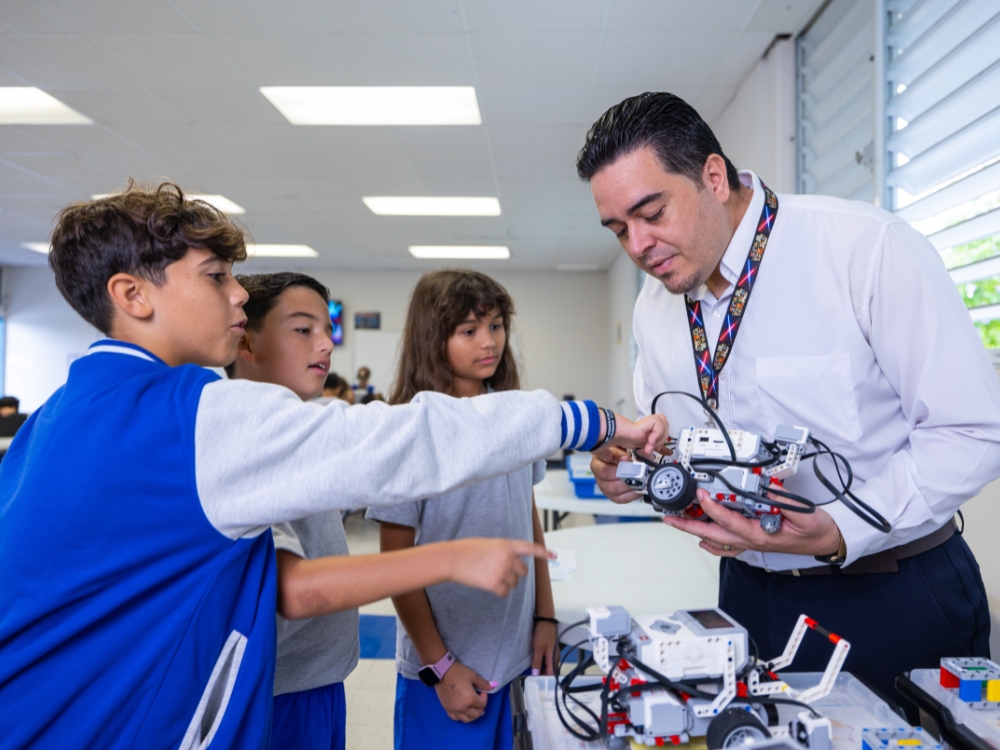
- Ask about the everyday experience behind those programs.
- Ask about instructional time.
- Ask about safety.
- Ask how academic progress is measured.
- Ask how English is actually used throughout the day.
- Ask about character education.
- Ask how students are prepared for technology and a changing world.
- Ask how teachers know their students.
And when you visit a campus, pay attention to something that cannot always be measured:
How does the school feel?
Watch how students interact with teachers. Listen to how adults speak to students. Look at what is happening inside classrooms. Ask difficult questions.
A school should be willing to answer them.
Finding the Right Fit for Your Family
There is no single school that is the right choice for every child.
And choosing a school should never be about finding the longest list of programs.
It should be about finding the educational environment that aligns with what you want for your child.
At Radians, we believe students should receive a rigorous education while developing character, independence, confidence, communication skills, and the ability to adapt to the world ahead.
They should be challenged.
They should be supported.
They should be known.
And their families should have confidence in the education and environment they have chosen.
That is what we mean when we say our students are:
Equipped for Life. Built for the Future.